
3 Essential Tips for Choosing the Perfect Casual Pants
In 2023, the U.S. pants market reached approximately $60 billion (covering casual, athletic, and formal wear), driven by trends like sustained outdoor demand (hiking/cycling pants growing 8-10% in athletic categories), remote-work-inspired casualization (softshell and stretch chinos gaining prominence), and sustainable materials (recycled polyester and organic cotton now exceeding 25% adoption among premium brands). Advancements in manufacturing, such as tape-bonded seamless technology for friction reduction/waterproofing in performance pants and temperature-regulating smart fibers for extreme climates, further elevate modern designs.
As a wardrobe staple, casual pants dominate daily wear for office commutes, social gatherings, and even leisure sports like golf. Below, we break down three critical factors—waist height, silhouette, and length—to help you master the art of selecting tailored, flattering styles.

The Challenge of Fit
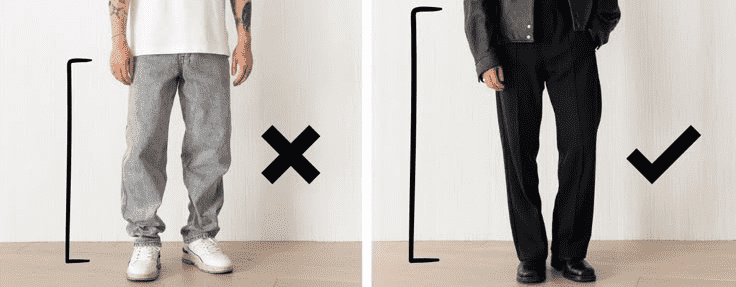
At first glance, casual pants seem nearly identical, but finding your perfect fit is surprisingly nuanced. Take the example

The man on the right faces two issues with his khakis:
- Loose tailoring creates a sloppy, unflattering silhouette.
- Excess crotch drop leads to sagging and discomfort.
Ideal casual pants should balance moderate tailoring with clean lines that subtly accentuate natural proportions. Let’s dive into the details.

1. Waist Height
Why do some pants elongate your legs while others shorten them? The answer often lies in waist positioning. Here’s how to decode it:

Low-Rise (Hip-Hugger)
Position : 3-5 cm below the navel.
Best for : Slim, long-legged frames.
Key note : Always size up slightly for comfort.

Mid-Rise (Natural Waist)
Position : Aligns with the navel.
Universal appeal : Flatters most body types and heights.

High-Rise
Position : 2.5 cm above the navel.
Best for : Elongating shorter legs or balancing longer torsos.
Summary : Prioritize mid- or high-rise styles. Low-rise pants often compromise comfort (restricted crotch space, stomach compression) and disproportionately shorten legs.
2. Silhouette
Three core cuts dominate casual pants。
Straight-Leg
Design: Consistent width from thigh to ankle.
Versatility: Universally flattering with unrestricted movement. Ideal for all body types.

Tapered
Design: Gradual narrowing from thigh to ankle (cone-shaped).
Best for: Balancing O-shaped legs or fuller thighs.

Slim-Fit
Design: Body-hugging cut with stretch fabrics.
Best for: Lean frames. Avoid if you have muscular thighs, as tightness emphasizes bulk.

Summary: Straight-leg pants reign supreme for their optical elongation. Aim for 5-10 cm of ease around thighs—enough to lengthen and streamline without clinging.
3. Length
The final touch: ankle.
Sweet spot: Opt for a 9/10 length (2-5 cm above shoes) to visually “lift” the leg and add height.
Putting It All Together
Next time you shop for casual pants, prioritize:
- A mid- or high-rise waist for proportion perfection.
- Straight-leg tailoring with strategic ease.
- Cropped hems or artful cuffing for polished elevation.

Perfectly fitted pants aren’t about trends—they’re about harmonizing structure, comfort, and your unique build.
Related Articles

Placket Choices Explained: 2-Button vs 3-Button vs 4-Button (Golf Fit & Merch)
Polo shirt 2 or 3 buttons—and where does a 4-button placket fit? This B2B guide compares 2-, 3-, and 4-button golf polo plackets by neckline feel, perceived formality, and merchandising role, plus quick sample checks.
Read more
Polo Collar Curling: How to Stop It—and How to Engineer a No-Curl Golf Polo Collar
Polo collar curling usually isn’t a “laundry issue” — it’s tension, shrink mismatch, and collar support working against you. This OEM-focused guide shows how to stop polo shirt collar curling with stitch control, collar fusing (fusible interlining), and simple wash tests — plus when collar stays actually help.
Read more
Piqué vs Jersey vs Interlock: Which Knit Works Best for Golf Polos?
Piqué, jersey, and interlock can all be used for golf polos, but they don’t wear—or brand—the same. This practical manufacturer guide explains what a piqué polo shirt is, the difference between piqué and jersey polos, and when interlock is the smarter upgrade, plus sampling checks before bulk.
Read more
Is a Golf Polo Business Casual? Here’s What Modern Workplace Style Says (2026)
A golf polo can fit into a business casual wardrobe when chosen and styled with professional intent. This guide explains dress code logic, styling tips, and what makes a polo appropriate in workplace environments.
Read more
polo shirt golf Women’s: An Educational Guide for Buyers and Apparel Professionals
A professional buyer’s guide to women’s golf polo shirts. Learn how to evaluate styles, define product specifications, assess suppliers, and source with confidence in B2B apparel sourcing.
Read more
Leave a comment
Your email address will not be published.