
4 Printed Logo Options to Help You Start Customizing Your Golf Apparel
“How is Customized Logos?”
“How do you add my logo on the golf apparel?”
“Is there any other way for my golf apparel logo printing?”
Quite a lot of golf apparel brands asked us.
A custom logo is usually the best way to distinguish your product from other products.
The two most common options for logo customization are printing and embroidery, this article will share with you the 4 most common printing solutions, it can help you understand the way printing and quickly opens up customization for your golf apparel brand!

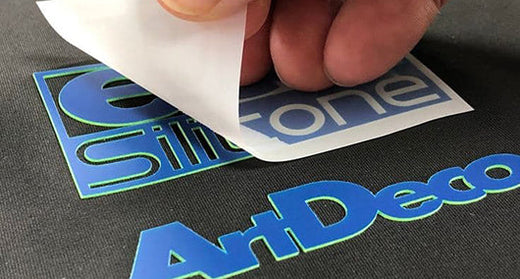
Heat transfer printing
Heat transfer printing is a digital printing method in which a design is printed onto special transfer paper using a heat press. The design is then transferred from the paper onto the fabric by applying heat and pressure.
Heat transfer printing technology can also use various transfer printing materials to achieve different printing effects, the most important one are film transfer printing and sublimation transfer printing.
The transfer paper for film transfer printing contains colloid, and then the colloid pattern is printed on the surface of the product by high temperature and high pressure. Using high-quality imported transfer paper and ink,the printed colloidal pattern is very thin, and it is breathable, non-sticky, non-cracking, washable and does not fall off.

Sublimation transfer printing is a new generation of technology, using special sublimation ink and sublimation transfer paper. There will be no gelatin when the pattern is printed on the product. If it is transferred to the clothes, the ink will be sublimated directly into the fibers of the clothes, which means the design won’t peel or fade. The reliability is the same as that of cloth dyeing, and the colors are sharp, which is more suitable for patterns with rich colors,Limited to light-colored polyester fabrics. It’s not suitable for dark-colored or non-polyester shirts.

Best For: Short runs and full-color designs.
Benefits: Uses heat to transfer designs from a special paper onto the fabric, offering good color accuracy and detail. It’s versatile and works on various fabrics.
Considerations: The design may have a plastic-like feel and can potentially peel or crack over time. Ensure proper heat application to enhance durability.
The heat-transfer printing process is more complicated than screen printing, and it requires a temperature range of 140°C to 180°C. Therefore, it is a bit more expensive than screen printing.If you need to print exquisite patterns with gradient colors, then the thermal transfer will be your best choice.
Screen Printing
Screen printing is a versatile and widely used printing technique that involves transferring ink through a mesh or screen onto fabric.
The process begins by creating a stencil, often made of a fine mesh screen (traditionally silk, but more commonly polyester or nylon mesh today). Areas of the screen are blocked off to create the desired design or image. Ink is then applied to the screen, and a squeegee is used to push the ink through the mesh onto the substrate, leaving the desired image or pattern.
One of the key strengths of custom screen printing is its ability to produce vibrant, durable, and long-lasting prints. It is suitable for both small and large-scale production runs, making it an ideal choice for Apparel Brands. Additionally, screen printing allows for a wide range of ink types, including specialty inks like metallic or glow-in-the-dark, enabling customization and creativity in the printing process.
Best For: Large runs and simple designs.
Benefits: Offers vibrant colors and durability. Screen printing is cost-effective for bulk orders and provides a high level of detail and consistency.
Considerations: Ideal for flat designs, as the process involves pushing ink through a mesh screen. It may not be suitable for very intricate or multi-color designs.

Direct-to-Garment (DTG) Printing
DTG printing stands for Direct to Garment printing. The DTG printing process is a relatively new method that produces high-quality printing that stays put for years. This printing process is also referred to as Inkjet to Garment Printing, Digital Garment Printing, and Digital Apparel Printing.
DTG printing is a technique for printing graphics on textiles and clothing. It prints whatever you want onto the garment using modified inkjet technology. Images are printed directly into clothing using a digital piezo print head. Think of a DTG machine as a large photo printer,It's essentially the same operation.
Best For: Detailed designs and small runs.
Benefits: Allows for high-resolution prints with a wide range of colors and gradients. DTG is perfect for complex, multi-colored designs and offers a soft finish that integrates well with fabric.
Considerations: Works best on 100% cotton shirts. The print may not be as durable as screen printing, especially with frequent washing.

water print
The process of printing with water-based paste is one of the earliest printing techniques used.
Printing water paste on clothes does not have a strong hand and coverage, and is only suitable for printing on light-colored fabrics. The price is relatively flat, it is a lower grade type of printing. However, it also has the advantage of not affecting the original texture of the fabric (less impact), so it is more suitable for large-area printing patterns.
The process of printing with water-based paste is one of the earliest printing techniques used.
Best For: Large runs and large-area printing patterns.
Benefits: Widely used, good firmness, softer feel, cheaper.
Considerations: coverage is not strong, the color is not very bright.

By selecting the appropriate printing method, you can achieve a professional and durable look for your golf apparel brand.Qiandao apparel for your custom printing needs ensures high-quality results tailored to your design requirements.
Related Articles

Placket Choices Explained: 2-Button vs 3-Button vs 4-Button (Golf Fit & Merch)
Polo shirt 2 or 3 buttons—and where does a 4-button placket fit? This B2B guide compares 2-, 3-, and 4-button golf polo plackets by neckline feel, perceived formality, and merchandising role, plus quick sample checks.
Read more
Polo Collar Curling: How to Stop It—and How to Engineer a No-Curl Golf Polo Collar
Polo collar curling usually isn’t a “laundry issue” — it’s tension, shrink mismatch, and collar support working against you. This OEM-focused guide shows how to stop polo shirt collar curling with stitch control, collar fusing (fusible interlining), and simple wash tests — plus when collar stays actually help.
Read more
Piqué vs Jersey vs Interlock: Which Knit Works Best for Golf Polos?
Piqué, jersey, and interlock can all be used for golf polos, but they don’t wear—or brand—the same. This practical manufacturer guide explains what a piqué polo shirt is, the difference between piqué and jersey polos, and when interlock is the smarter upgrade, plus sampling checks before bulk.
Read more
Is a Golf Polo Business Casual? Here’s What Modern Workplace Style Says (2026)
A golf polo can fit into a business casual wardrobe when chosen and styled with professional intent. This guide explains dress code logic, styling tips, and what makes a polo appropriate in workplace environments.
Read more
polo shirt golf Women’s: An Educational Guide for Buyers and Apparel Professionals
A professional buyer’s guide to women’s golf polo shirts. Learn how to evaluate styles, define product specifications, assess suppliers, and source with confidence in B2B apparel sourcing.
Read more
Leave a comment
Your email address will not be published.